ELISA Substrates and Reagents
- (10)
- (5)
- (402)
- (3)
- (1)
- (1)
- (167)
- (18)
- (76)
- (2)
- (4)
- (2)
- (2)
- (6)
- (1)
- (1)
- (1)
- (1)
- (1)
- (1)
- (2)
- (2)
- (24)
- (2)
- (1)
- (3)
- (5)
- (1)
- (1)
- (1)
- (2)
- (1)
- (478)
- (1)
- (1)
- (1)
- (1)
- (1)
- (2)
- (1)
- (2)
- (1)
- (1)
- (6)
- (2)
- (2)
- (1)
- (4)
- (1)
- (1)
- (1)
- (22)
- (3)
- (1)
- (14)
- (1)
- (2)
- (1)
- (1)
- (1)
- (3)
- (1)
- (1)
- (1)
- (1)
- (1)
- (1)
- (3)
- (4)
- (4)
- (2)
- (2)
- (7)
- (213)
- (166)
- (147)
- (79)
- (6)
- (43)
- (1)
- (2)
- (177)
- (370)
- (1)
- (1)
- (3)
- (3)
- (1)
- (15)
- (1)
- (2)
- (7)
- (8)
- (1)
- (3)
- (838)
- (332)
- (4)
- (12)
- (4)
- (1)
- (91)
- (1)
- (2)
- (46)
- (31)
- (97)
- (10)
- (171)
- (42)
- (63)
- (192)
- (29)
- (74)
- (200)
- (5)
- (1)
Filtered Search Results
MSC POWERQUAD PULSEAIR VAC KT
9PC 30GAL 1.5 149CFM POWERQUAD PULSEAIR VAC KT
Non-distribution item offered as a customer accommodation; additional freight charges may apply.
Learn More
Cayman Chemical Testosterone ELISA Standard, 1 ea
Testosterone ELISA Standard, 1 ea
Non-distribution item offered as a customer accommodation; additional freight charges may apply.
Learn More
AnaSpec SensoLyte Rh110 Furin Activity Assay Kit
SensoLyte Rh110 Furin Activity Assay Kit
Non-distribution item offered as a customer accommodation; additional freight charges may apply.
Learn More
ABclonal Technology p-RPS6-S235/236
Small and Specialty Supplier Partner
Small and/or specialty supplier based on Federal laws and SBA requirements.
Learn More
Small and/or specialty supplier based on Federal laws and SBA requirements.
Learn More
Ribosomes the organelles that catalyze protein synthesis consist of a small 40S subunit and a large 60S subunit Together these subunits are composed of 4 RNA species and approximately 80 structurally distinct proteins This gene encodes a cytoplasmic ribosomal protein that is a component of the 40S subunit The protein belongs to the S6E family of ribosomal proteins It is the major substrate of protein kinases in the ribosome with subsets of five C-terminal serine residues phosphorylated by different protein kinases Phosphorylation is induced by a wide range of stimuli including growth factors tumor-promoting agents and mitogens Dephosphorylation occurs at growth arrest The protein may contribute to the control of cell growth and proliferation through the selective translation of particular classes of mRNA As is typical for genes encoding ribosomal proteins there are multiple processed pseudogenes of this gene dispersed through the genome
Non-distribution item offered as a customer accommodation; additional freight charges may apply.
Learn More
Medchemexpress LLC Kt-474 50Mg | HY-145483-50MG
Small and Specialty Supplier Partner
Small and/or specialty supplier based on Federal laws and SBA requirements.
Learn More
Small and/or specialty supplier based on Federal laws and SBA requirements.
Learn More
Kt-474 50Mg
Non-distribution item offered as a customer accommodation; additional freight charges may apply.
Learn More
ABclonal Technology CCL1 Rabbit pAb
Small and Specialty Supplier Partner
Small and/or specialty supplier based on Federal laws and SBA requirements.
Learn More
Small and/or specialty supplier based on Federal laws and SBA requirements.
Learn More
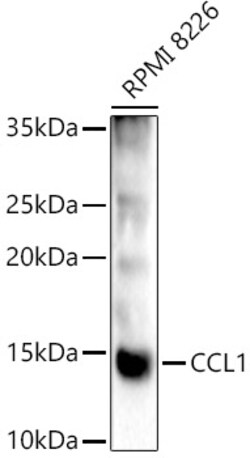
This antimicrobial gene is one of several chemokine genes clustered on the q-arm of chromosome 17. Chemokines form a superfamily of secreted proteins involved in immunoregulatory and inflammatory processes. The superfamily is divided into four subfamilies based on the arrangement of the N-terminal cysteine residues of the mature peptide. This chemokine, a member of the CC subfamily, is secreted by activated T cells and displays chemotactic activity for monocytes but not for neutrophils. It binds to the chemokine (C-C motif) receptor 8.
Non-distribution item offered as a customer accommodation; additional freight charges may apply.
Learn More
Cygnus Technologies HEK 293 HCP CONTROL SET
HEK 293 HCP Control Set (F650S-C) 5 ng/ml and 75 ng/ml
Non-distribution item offered as a customer accommodation; additional freight charges may apply.
Learn More
Medchemexpress LLC Phospho-AKT(S473) antibody (YA5759) | 56 kDa | 50 UL
Small and Specialty Supplier Partner
Small and/or specialty supplier based on Federal laws and SBA requirements.
Learn More
Small and/or specialty supplier based on Federal laws and SBA requirements.
Learn More
Phospho-AKT(S473) antibody (YA5759) is a mouse-derived, non-conjugated monoclonal antibody targeting Phospho-AKT(S473). The AKT protein, a member of the AKT kinase family, is pivotal in regulating cellular processes including metabolism, proliferation, survival, growth, and angiogenesis. It functions by phosphorylating numerous downstream substrates, with AKT1 involved in modulating over 100 candidates, orchestrating glucose uptake and storage, protein synthesis, and lipid metabolism. This antibody is a key tool for research into these complex cellular pathways.
- Formulation: supplied in PBS containing 50% glycerol, 0.5% BSA and 0.02% sodium azide.
- Purity: affinity chromatography.
- Storage and stability: stored at -20°C for 1 year. Avoid repeated freeze / thaw cycles.
- Appearance: liquid.
- Applications: WB (1:1000-2000), IHC-P (1:100-200), ICC/IF (1:50-200).
- Shipping: shipped with blue ice.
Non-distribution item offered as a customer accommodation; additional freight charges may apply.
Learn More
Medchemexpress LLC Phospho-AKT(S473) Antibody (YA5759) | 56 kDa | 10 UL
Small and Specialty Supplier Partner
Small and/or specialty supplier based on Federal laws and SBA requirements.
Learn More
Small and/or specialty supplier based on Federal laws and SBA requirements.
Learn More
Phospho-AKT(S473) Antibody (YA5759) is a mouse-derived, non-conjugated monoclonal antibody specifically designed to target Phospho-AKT(S473). This antibody is supplied in a liquid formulation containing PBS, 50% glycerol, 0.5% BSA, and 0.02% sodium azide. It is purified through affinity chromatography, ensuring high specificity for research applications.
- For research use only
- Monoclonal antibody, mouse-derived
- Targets Phospho-AKT(S473)
- Supplied in PBS with 50% glycerol, 0.5% BSA, 0.02% sodium azide
- Appearance: liquid
- Storage at -20°C for up to 1 year
- Avoid repeated freeze/thaw cycles
- Shipped with blue ice
Non-distribution item offered as a customer accommodation; additional freight charges may apply.
Learn More
Meridian Life Science MERIDIAN LIFE SCIENCE
5000948158 MAB TO OSTEOPONTIN NT
Non-distribution item offered as a customer accommodation; additional freight charges may apply.
Learn More
Boston Bioproducts Inc PHOSPHO-PROTEIN EXTR BUF 500ML
NC3711109 PHOSPHO-PROTEIN EXTR BUF 500ML
Non-distribution item offered as a customer accommodation; additional freight charges may apply.
Learn More
ACCEGEN BIOTECH HI-QC MOUSE DNTL PULP MED KT
NC3368280 HI-QC MOUSE DNTL PULP MED KT
Non-distribution item offered as a customer accommodation; additional freight charges may apply.
Learn More
Sigma Aldrich Fine Chemicals Biosciences Osteopontin from mouse 95
Osteopontin from mouse 95
Non-distribution item offered as a customer accommodation; additional freight charges may apply.
Learn More
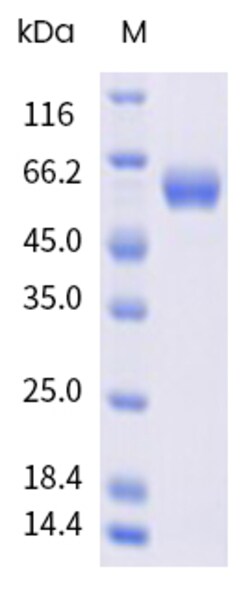
Sino Biological Recombinant Human BAFF/BLyS/TNFSF13B Protein (Trimer, His Tag), MALS-verified 1 mg
A DNA sequence encoding the Human TNFSF13B (NP_006564.1) (Glu140-Leu285) was expressed with a polyhistidine tag at the N-terminus. This construct has a trimer design.
Non-distribution item offered as a customer accommodation; additional freight charges may apply.
Learn More
ABclonal Technology Phospho-SHP2-Y542 Rabbit pAb
Small and Specialty Supplier Partner
Small and/or specialty supplier based on Federal laws and SBA requirements.
Learn More
Small and/or specialty supplier based on Federal laws and SBA requirements.
Learn More
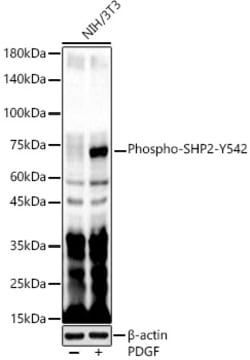
The protein encoded by this gene is a member of the protein tyrosine phosphatase (PTP) family. PTPs are known to be signaling molecules that regulate a variety of cellular processes including cell growth, differentiation, mitotic cycle, and oncogenic transformation. This PTP contains two tandem Src homology-2 domains, which function as phospho-tyrosine binding domains and mediate the interaction of this PTP with its substrates. This PTP is widely expressed in most tissues and plays a regulatory role in various cell signaling events that are important for a diversity of cell functions, such as mitogenic activation, metabolic control, transcription regulation, and cell migration. Mutations in this gene are a cause of Noonan syndrome as well as acute myeloid leukemia.
Non-distribution item offered as a customer accommodation; additional freight charges may apply.
Learn More